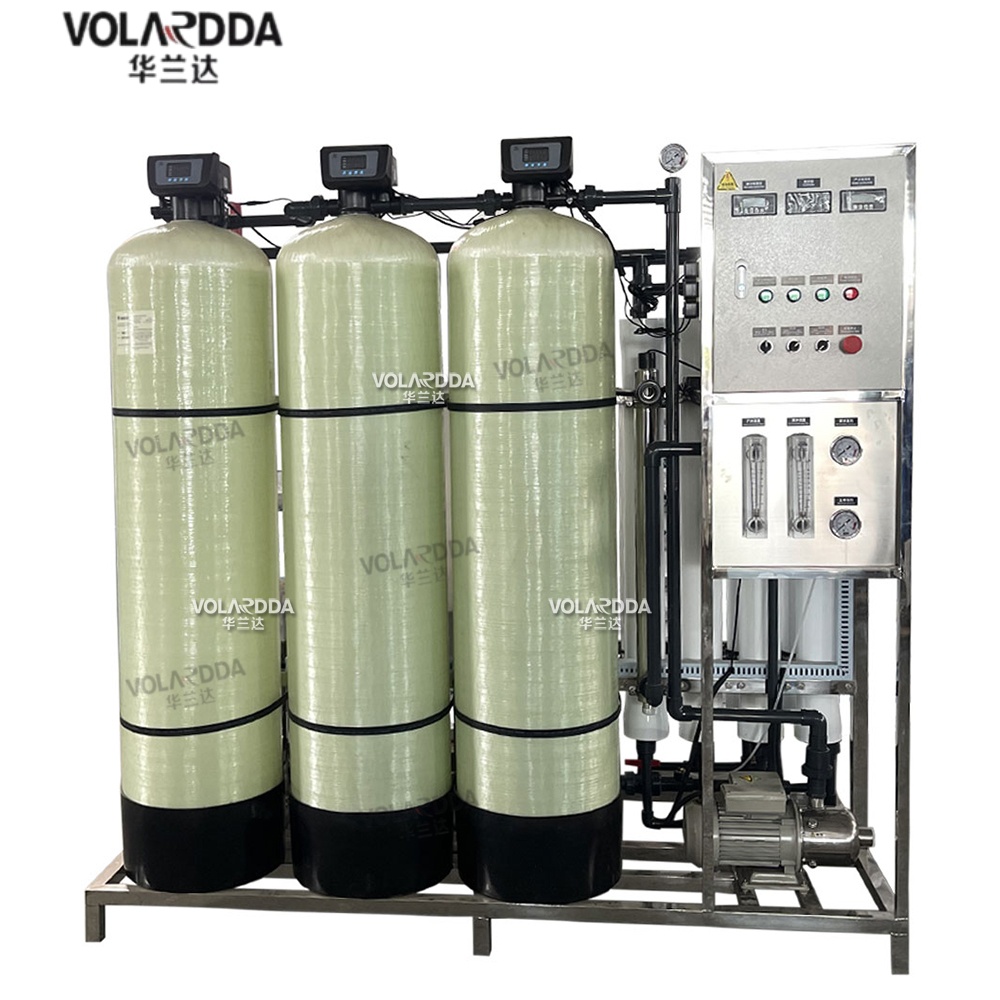
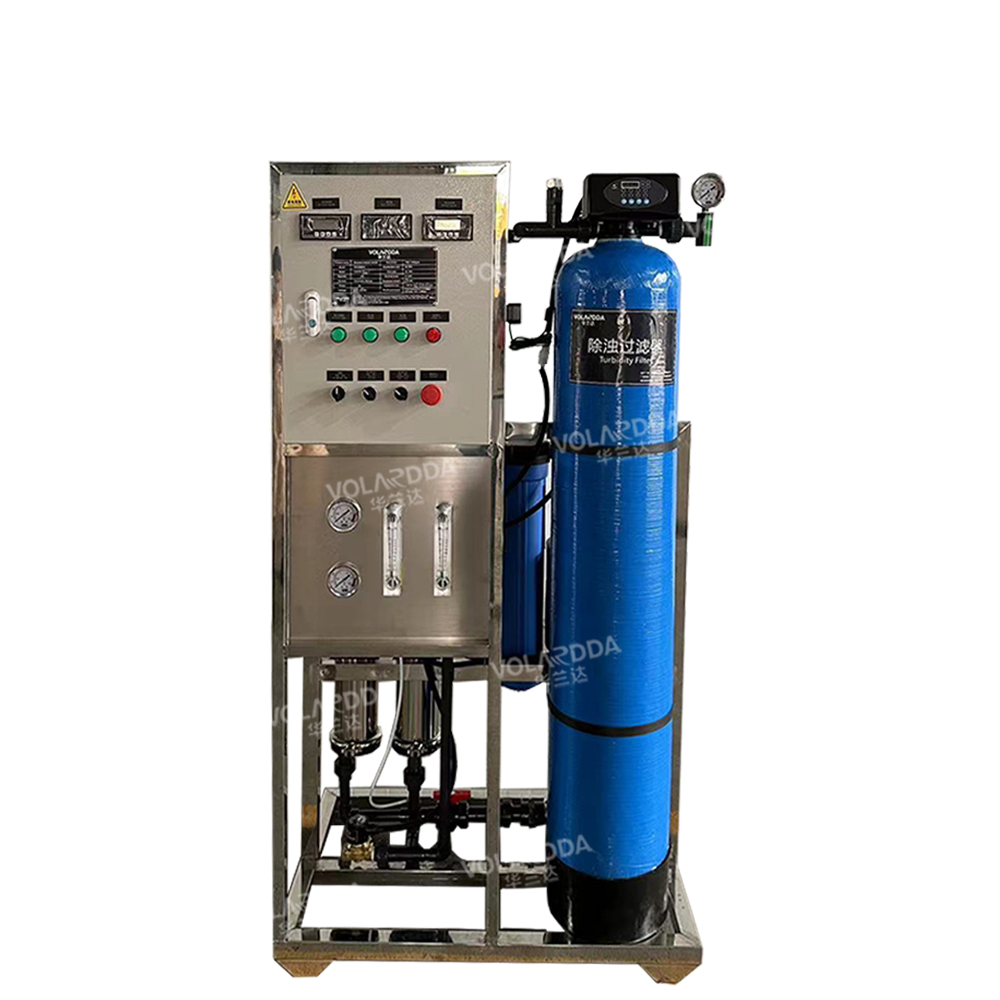

Standard scope of supply for this configuration.
| Technical specifications | |
|---|---|
| Equipment model | HLDRO–2000L |
| Water production | 2,000 L/H |
| Influent water source | TDS up to 250 ppm, water temperature 25 C |
| Produced water quality | Conductivity 10 us/cm or lower, TOC 0.5 mg/L or lower, microorganism 100 cfu/ml or lower |
| Desalination rate | 95-99.6% |
| Water recovery rate | 50-70% |
| Power supply | AC 220V/50Hz or AC 380V/50Hz |
| Power | 1.5-1.8 kW |
| Working pressure | Pre-treatment 0.2-0.4 MPa, RO host 0.8-1.5 MPa |
| Inlet / outlet diameter | DN25 / DN20 |
| Equipment size | 1800 x 680 x 1780 mm |
| Packing volume | about 2.35 m3 |
| Weight | 230-300 kg |
| Applications | Purified drinking water, beverage and food production, chemical and biopharmaceutical water, medical equipment cleaning, reagent preparation, dialysis water |
Specifications are typical for the standard configuration and are confirmed on the approved drawing before production. Capacity, voltage and footprint can be adapted to your site.
Tell us the raw water source, the hourly flow you need and the target water quality. We will confirm capacity, recovery and power before you commit.
A stainless steel feed pump lifts source water from the raw water tank and holds a steady suction pressure for the whole train.
A fibreglass pressure vessel with quartz sand removes turbidity; activated carbon then strips chlorine, colour and odour.
An automatic softener, or antiscalant dosing on high-hardness sources, keeps calcium and magnesium from scaling the membranes.
A 5 micron PP cartridge guard stops any residual particle before the water reaches the high-pressure section.
A multistage centrifugal pump pushes water at 0.8-1.5 MPa through the membrane elements, and permeate leaves the vessel at 10 us/cm or lower.
Permeate is stored in a stainless tank and finished with UV sterilisation or ozone dosing before it is sent to filling.
Start from your peak hourly demand, then add 15-20 percent headroom. If you plan to run two shifts, size on the two-shift figure so the plant is not throttled during the busiest hours.
The standard skid is designed for TDS up to 250 ppm at 25 degrees C. For brackish or high-hardness sources we adjust the pre-treatment, membrane array and pump selection at the quotation stage.
Typically two to three years when pre-treatment is maintained and the unit is flushed regularly. Membrane life drops quickly if chlorine reaches the elements, which is why the carbon filter is not optional.
Yes. 220V/50Hz, 380V/50Hz and 440V/60Hz are all available, and the control cabinet is configured to your local standard before shipment.
Standard configurations ship in 15-25 working days after the deposit and the approved drawing. Custom skids with extended pre-treatment take a little longer.

RO membranes typically remove 90-99.9% of suspended and dissolved solids and can remove bacteria and viruses.

RO membranes typically remove 90-99.9% of suspended and dissolved solids and can remove bacteria and viruses.

RO membranes typically remove 90-99.9% of suspended and dissolved solids and can remove bacteria and viruses.