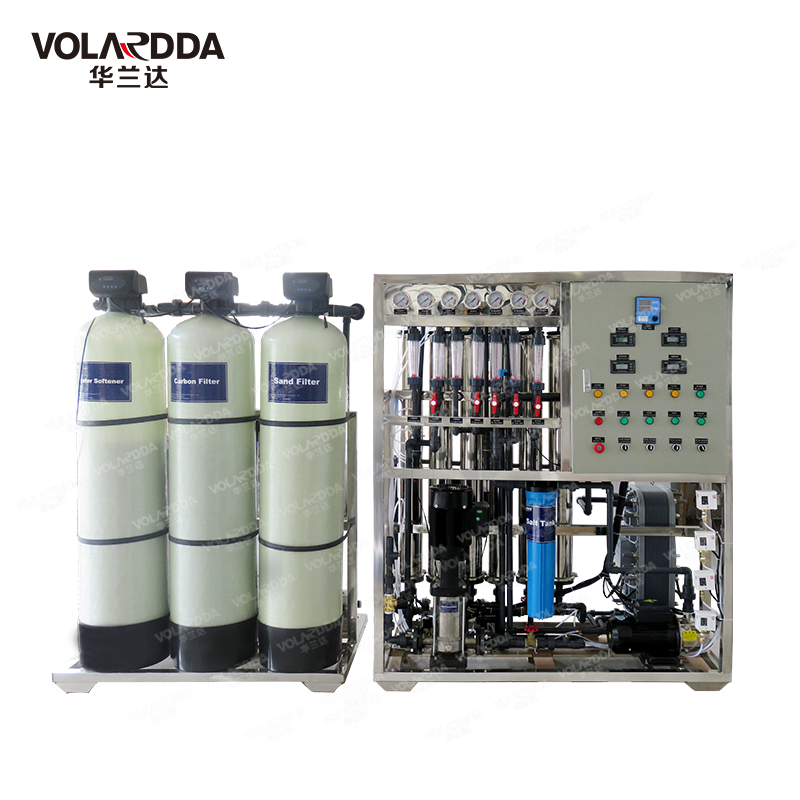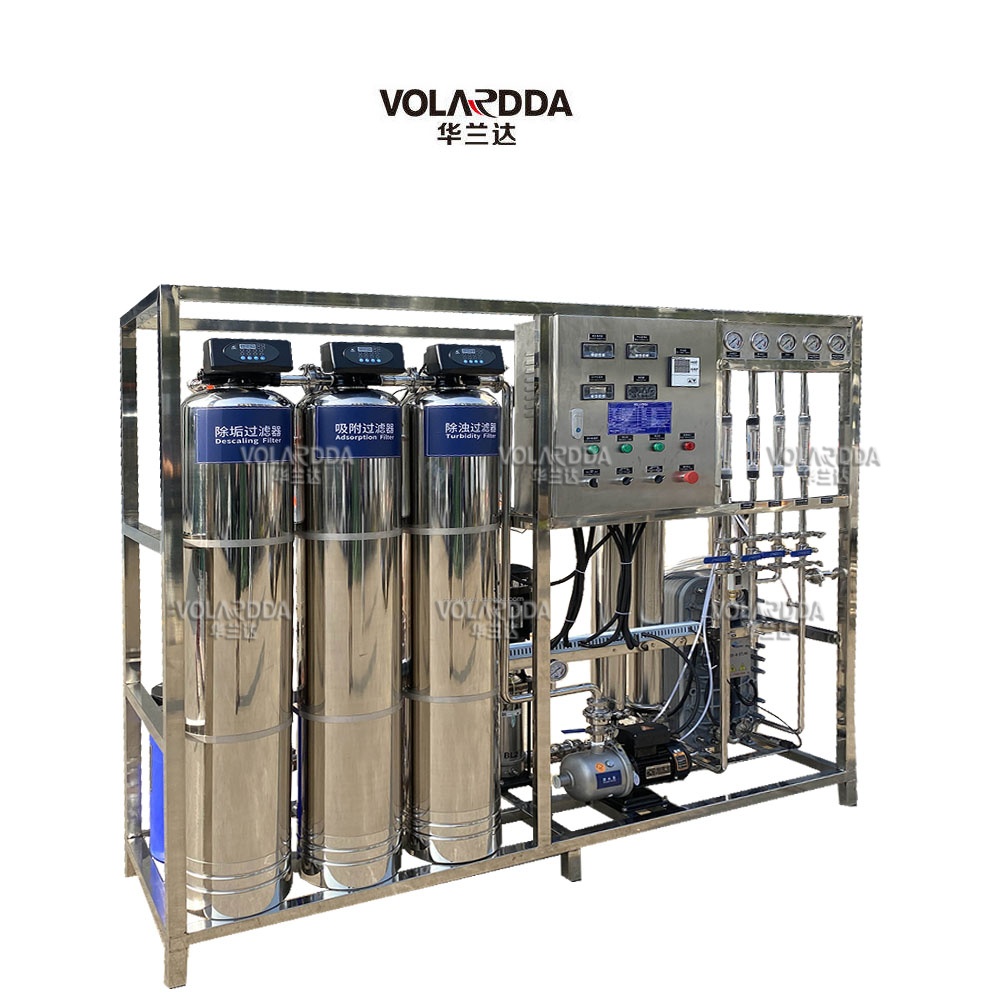
500LPH RO EDI System Machine
EDI ultrapure water equipment

500LPH RO EDI System Machine

RO membranes typically remove 90-99.9% of suspended and dissolved solids and can remove bacteria and viruses.
Model HLDRO—EDI—500L  |  Capacity 500 L/H
500 L/H ultrapureRO + EDINo chemical regenerationCompact footprint
Capacity500 L/H
Product water10-18.2 MOhm.cm
Power1.5-1.8 kW
Footprint1400 x 580 x 1630 mm
CE-compliant build12-month warrantyOEM / ODM welcome
Product Overview

Product overview

The 500LPH RO EDI System machine is an EDI ultrapure water system rated for 500 litres per hour. Electrodeionisation polishes RO permeate to laboratory-grade resistivity without the chemical regeneration that mixed-bed resins require, so the skid runs continuously with only routine monitoring. Because no acid and caustic are handled on site, the unit suits pharmaceutical and biotech plants, hospital dialysis centres, electronics and semiconductor lines and any facility where chemical storage is restricted. Resistivity, flow and pressure are displayed on the control panel and alarms stop the system on out-of-spec water.

What's included

Standard scope of supply for this configuration.

  • Pre-treatment vessels and precision filter
  • Two-stage RO array with high-pressure pump
  • RO permeate storage tank
  • EDI stack and power supply module
  • Polishing loop with 0.22 micron filter
  • Inline resistivity and flow instrumentation
  • PLC cabinet with data logging
  • SS304 skid, piping and valves
Technical Data

Specifications

Technical specifications
Equipment modelHLDRO—EDI—500L
Water production500 L/H
Influential water sourceTDS ≤250 PPM, water temperature 25 ℃
Produced water qualityConductivity <10 μs/cm, total organic carbon <0.5 mg/L, microorganism <100 cfu/ml
Desalination rate96-99%
Water recovery rate50-70%
Power supplyAC220V/50Hz or AC380V/50Hz
Power1.5-2.2 KW
Work pressurePretreatment 0.2-0.4 MPa, RO host 0.8-1.5 MPa
Inlet diameter (mm)DN25
Outlet diameter (mm)DN20
Equipment size (mm)1800*580*1630
Equipment volume areaabout 1.5 m²
Packing volumeabout 2.35 m³
Weight (KGS)230-300 KGS
ApplicationsPurified drinking water, purified water used in beverage and food factories; production water in daily chemical products factories, biopharmaceutical water, medical equipment cleaning water, reagent preparation water, hospital dialysis water, oral liquid water, medical purified water, electronic semiconductor production water

Specifications are typical for the standard configuration and are confirmed on the approved drawing before production. Capacity, voltage and footprint can be adapted to your site.

Not the right size?

Tell us the raw water source, the hourly flow you need and the target water quality. We will confirm capacity, recovery and power before you commit.

How it works

From raw water to finished water

Pre-treatment

Sand, carbon and softener vessels condition the feed water so the RO and EDI stacks see a stable, low-fouling stream.

Reverse osmosis

A two-stage RO array removes the bulk of dissolved solids and brings conductivity down to the single-digit us/cm range.

RO permeate tank

Treated water is buffered in a stainless tank, which decouples RO output from the EDI demand.

EDI stack

An electrical field drives ions through ion-exchange membranes, so no acid or caustic regeneration is needed.

Ultrapure loop

Polishing and 0.22 micron filtration deliver water at 10-18.2 MOhm.cm to the point of use.

Monitoring

Inline resistivity, flow and pressure transmitters report to the PLC and log every batch.

Applications

Where this system is used

Selected for edi ultrapure water equipment duty across these sectors.
Pharmaceutical water
Electronics and semiconductor
Laboratory and reagent water
Power plant make-up
Cosmetics production
Beverage and bottled water
FAQ

Questions buyers ask before ordering

Yes. EDI needs a low-conductivity feed, so RO is always part of the train. The EDI stack then polishes the permeate to ultrapure quality without chemical regeneration.

EDI runs continuously and regenerates electrically in place, so there is no acid or caustic handling, no resin replacement shut-down and no chemical waste stream.

Resistivity of 10-18.2 MOhm.cm depending on the feed and the polishing loop, with TOC below 0.5 mg/L and microbial counts under 100 cfu/ml.

Annual inspection of the stacks, seals and electrodes, plus continuous monitoring of differential pressure and resistivity. Consumables are limited to cartridge filters and UV lamps.

The PLC handles start-up, standby, alarm and data logging, so the plant can run with a daily operator round rather than full-time attendance.

Ready to specify this system?

Send us your raw water analysis, the hourly flow you need and the target water quality. Our engineers will confirm capacity, configuration and delivery.